
Import used weaving machines from Türkiye to India
A step-by-step guide for Indian mills: import rules, the Chartered Engineer report, customs duty, shipping from Türkiye and the documents to prepare.
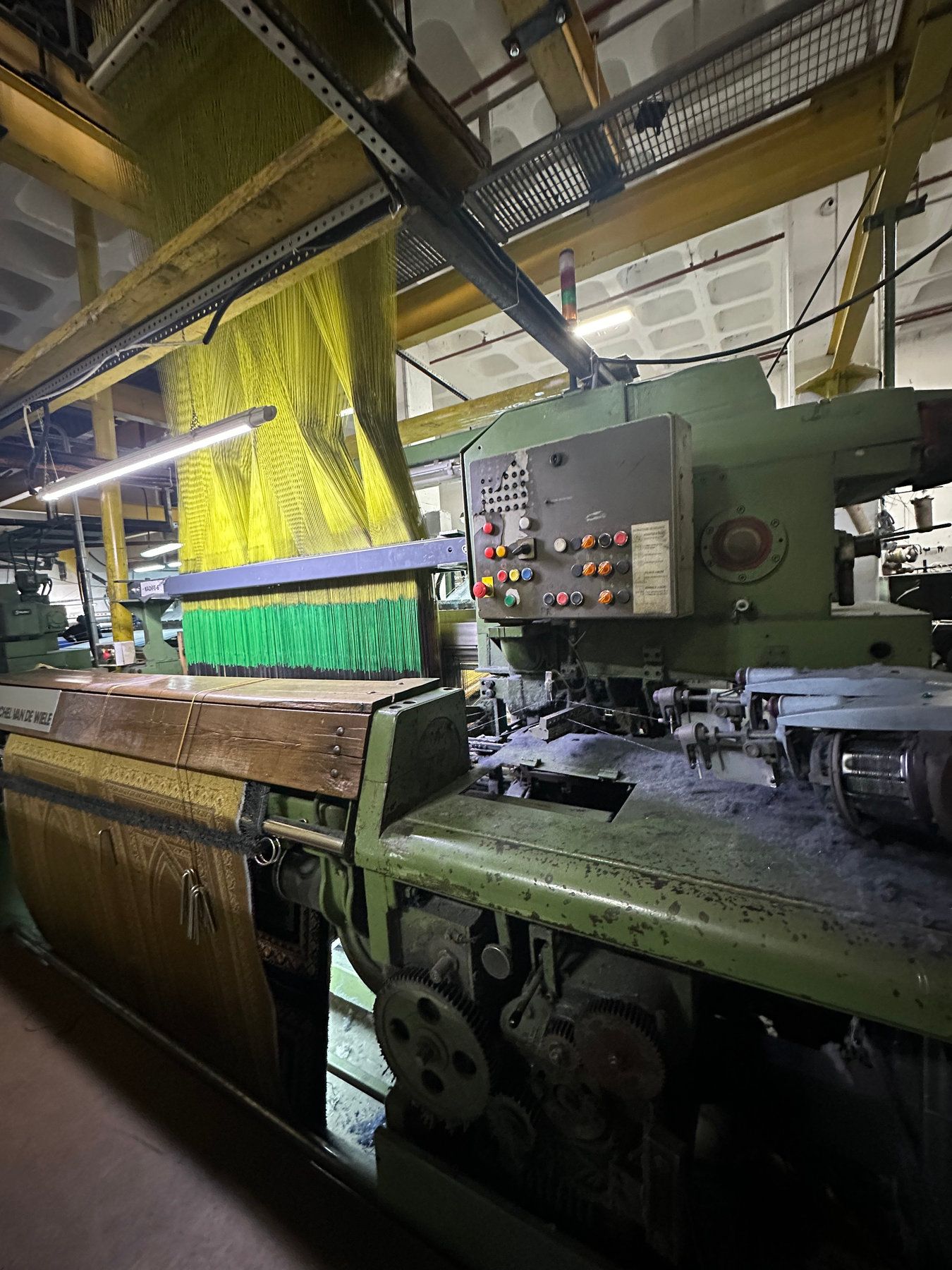
Many Indian textile mills want more capacity without paying for brand-new equipment. A used weaving machine from Türkiye is one way to get it. European looms and jacquards are widely used in Türkiye, and you can buy them together with the technicians, spare parts, harness work and conversions that keep them running.
A good machine at a good price is only part of the job. You also need to know India’s import rules, customs duty, inspection, transport and installation. This guide covers the whole route, from finding a machine in Türkiye to weaving your first fabric in India.
In short: Under Paragraph 2.31 of India’s Foreign Trade Policy 2023, most used weaving machines can be imported freely. You need an IEC. You should get a Chartered Engineer report in Türkiye before the machine is dismantled. Budget for basic customs duty, the social welfare surcharge and 18% IGST. Ship by sea to Mundra, Nhava Sheva or another Indian port. One trap: India’s nil-duty exemption for shuttleless looms covers new machines only. A used loom does not get it.
The route at a glance
- Define the fabric you want to weave: width, structure, yarn, pile height, design size.
- Shortlist and inspect machines in Türkiye, on video or on site.
- Price the conversions the machine needs before you agree a price.
- Sign the sales agreement and pay the deposit.
- Get the Chartered Engineer report while the machine is still assembled.
- Dismantle, pack and ship from a Turkish port.
- Clear customs in India: Bill of Entry, duty, release.
- Install, fit the harness and start production.
1. Why buy used weaving machines from Türkiye?
Türkiye is a strong sourcing market for mills weaving velvet, upholstery, carpet and decorative fabric. The main advantages:
- Lower capital cost than new machinery.
- European brands, such as Van de Wiele looms and Stäubli jacquards.
- You can see the machine running while it is still in production.
- Experienced technicians who know these machines.
- Spare parts and jacquard harnesses are available locally.
- Refurbishment and conversions can be done before shipment.
For mills in Panipat, Surat, Ludhiana, Bhadohi, Mumbai and India’s other textile centres, Türkiye is a practical place to source machines for expansion.
What is available depends on the second-hand market and on when Turkish mills replace their equipment. Our current listings include:
- Van de Wiele MPS22, MPS32, VME22 and VMM32 velvet looms, 175 to 210 cm wide
- Güsken dobby looms
- Stäubli LX jacquards from 6,144 to 14,336 hooks
- Devmaksan warping machines
- complete velvet weaving plants
2. Can India import second-hand weaving machines?
Yes. Paragraph 2.31 of India’s Foreign Trade Policy 2023 lists second-hand capital goods. It restricts a few, such as desktop computers, air conditioners and diesel generating sets. Everything else is in the category “all other second-hand capital goods”, which is free to import. Complete weaving machines normally fall in that category. You normally don’t need a separate import licence for them.
Before you buy, check:
- your Importer Exporter Code (IEC), which every importer needs,
- the ITC-HS classification of the machine,
- what customs needs for valuation,
- what inspection and certification is required,
- any product-specific rules that may apply.
Refurbished spare parts imported on their own follow a separate rule. They are also free to import, but only with a Chartered Engineer certificate showing at least 80% residual life of the original spare.
An experienced Indian customs broker should confirm the requirements for your shipment before the machine leaves Türkiye.
Regulatory update for 2026
In January 2026, India’s Ministry of Heavy Industries withdrew the Machinery and Electrical Equipment Safety (Omnibus Technical Regulation) Order, 2024.
Older articles say this order would make BIS certification under Scheme X mandatory for weaving machines from September 2026. Don’t rely on them. Other product-specific rules may still apply, so check with your broker.
3. Choosing the right used machine
The year of manufacture and the price tell only part of the story. A machine that suits one mill may need expensive changes before it can make another mill’s product.
Before buying, check:
- manufacturer, model and year
- effective weaving width
- mechanical and electronic condition
- jacquard model and number of hooks
- dobby or jacquard configuration
- speed and fabric density
- electrical supply (see below)
- availability of electronic parts and spares
- accessories included in the sale
- maintenance and refurbishment history
On power supply: Türkiye’s three-phase grid runs at 400 V, 50 Hz, and Indian industrial supply is usually 415 V, 50 Hz. The frequency is the same, so motors normally match. Still, check the control voltages and the condition of the electrical cabinet.
Used Van de Wiele velvet looms: what to check
For a Van de Wiele MPS22, MPS32, VME22 or VMM32, also look at:
- pile height and the fabric structure you plan to weave
- jacquard capacity and harness configuration
- reed and lancet specifications
- spring-loaded healds
- the pile cutting system
- the rapier mechanisms
- creel and warp beam configuration
- whether it suits the yarns you plan to use
A machine that has woven upholstery velvet may need changes before it can weave prayer rugs or heavier carpet structures. Identify and price these changes before you sign. If you need a wider fabric, some Van de Wiele looms can be extended to a wider working width.
You are not just buying a weaving machine. You are buying a machine that can make your product at a profit. Our 7-point checklist for used Van de Wiele looms goes into more detail.
4. Arrange a technical inspection in Türkiye
If you can, inspect the machine while it is still installed and running at the seller’s mill. A thorough inspection covers:
- the machine running at production speed, filmed with the sound on, so you can hear the gears and the rapier drive
- fabric samples woven on that machine
- nameplates and serial numbers of the loom and the jacquard
- the jacquard and harness: model, hook count, harness condition
- wear parts: rapiers and grippers, the cutting knife, reeds and lancets
- electronics: controller, drives, display, recent error messages
- the frame and gearboxes: oil leaks, cracks, welding repairs
- what is included: beams, creel, spare parts, manuals, maintenance records
A video of the machine running and real fabric samples matter most when you can’t travel to Türkiye. Ask us for a video inspection with the parts you care about shown up close, a live demonstration, or a site visit.
The inspection also tells you what refurbishment will cost and which parts to replace before shipment.
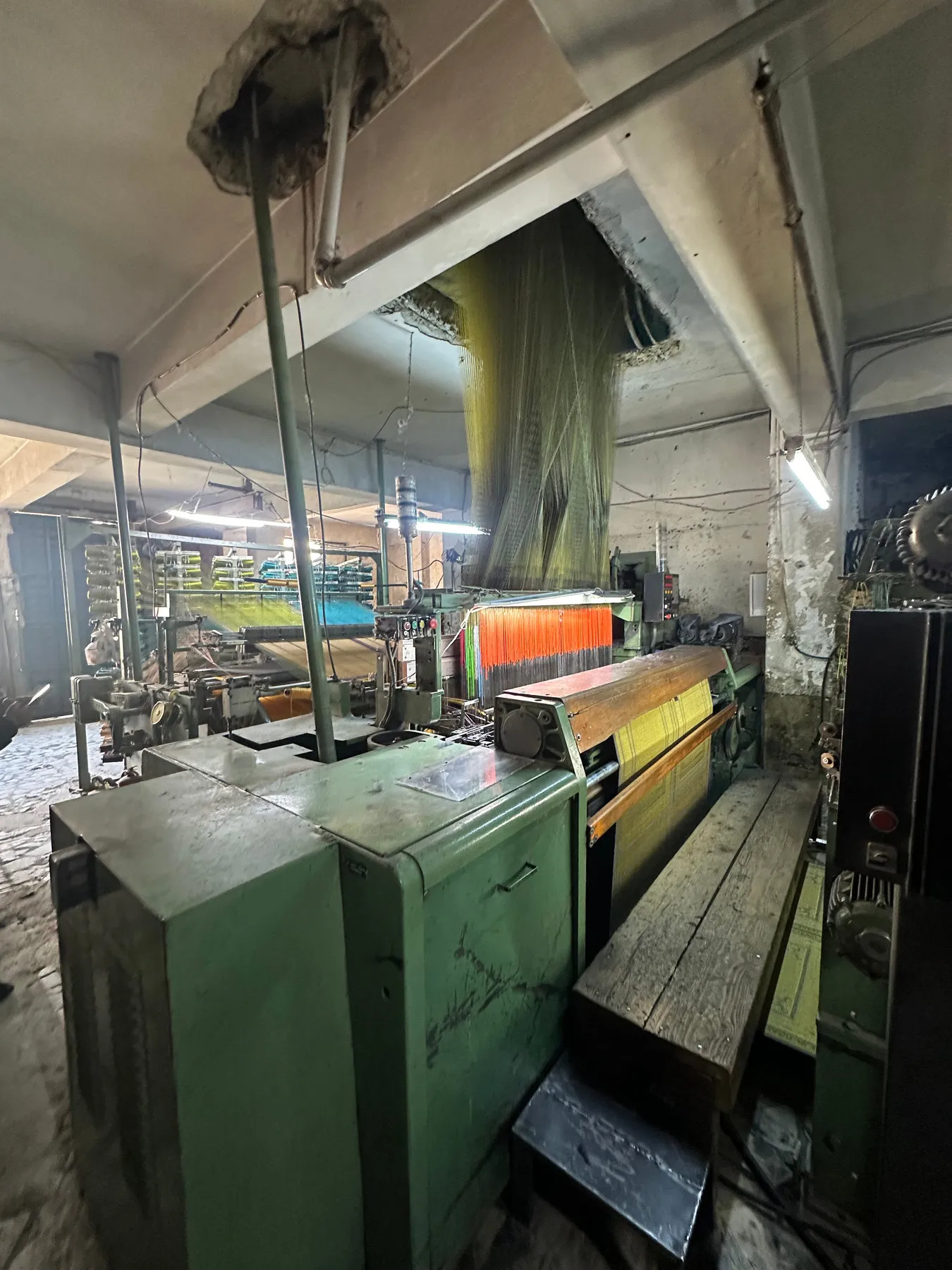
5. Get the Chartered Engineer report
For used machinery entering India, the Chartered Engineer report is one of the key documents. CBIC Circular No. 07/2020-Customs sets out how customs inspects and values used capital goods:
- Form A is the report of a Chartered Engineer, or an equivalent qualified professional, in the country of sale. Here that country is Türkiye. The engineer encloses a certificate from a national body that qualifies them to do the inspection.
- If you don’t obtain an overseas report, an engineer empanelled by the Custom House at the port of import can inspect the machine in India. They use Form B.
- Certificates from pre-shipment inspection agencies are no longer accepted for valuing used machinery.
The Form A report covers:
- date and place of the inspection
- seller and importer details, including the IEC
- manufacturer, model and year of manufacture
- serial number or nameplate, with a photograph
- original invoice price, or an estimate of it
- present condition and expected remaining life
- any reconditioning or repairs and their cost
- catalogues and other documents used
Customs compares the declared value with the engineer’s report and with the machine’s depreciated value. A large gap means the officer will ask you to explain the price. An invoice that matches the machine’s real condition avoids delays.
Practical tip: book the inspection before dismantling starts. The engineer needs to see the machine assembled, with its nameplate visible.
A Chartered Engineer certificate is not CE marking. CE marking is the European conformity mark. The two serve completely different purposes.
6. Calculate the import duty
Complete weaving machines are classified under HS heading 8446. Shuttleless looms for fabric wider than 30 cm, such as rapier velvet looms, fall under 8446 30. Jacquards shipped as separate units fall under heading 8448. The exact eight-digit code depends on the machine and how it is shipped. Your broker confirms it.
Don’t assume the shuttleless loom exemption applies. In February 2025, India cut basic customs duty to nil for several shuttleless rapier, air-jet and water-jet looms (Notification 50/2017-Customs, as amended by Notification 05/2025-Customs). That entry covers goods “other than old and used”. A used loom pays the normal rate.
Example: duty on a used loom
The standard basic customs duty on these tariff lines is 7.5%. After the September 2025 GST changes, IGST on heading 8446 is 18%. Here is how the duty adds up for every 100 units of assessable value:
| Component | How it is calculated | Per 100 of assessable value |
|---|---|---|
| Basic Customs Duty (BCD) | 7.5% of assessable value | 7.50 |
| Social Welfare Surcharge (SWS) | 10% of BCD | 0.75 |
| IGST | 18% of (value + BCD + SWS) | 19.49 |
| Total duty and tax | 27.74 |
The example assumes standard rates and no exemptions. It leaves out any other cess or levy. Assessable value usually means the machine’s value plus freight and insurance to India, with any other adjustments customs requires.
A GST-registered business can usually claim the import IGST as input tax credit, subject to the usual conditions. That brings the real cost closer to the basic duty and surcharge.
Before you commit, have your customs broker check the current rates on ICEGATE.
7. Shipping from Türkiye to India
Most used weaving machines travel by sea because of their size and weight. Which container you need depends on the machine’s dimensions, how far it is dismantled and how it is loaded.
| Container | When it fits | Watch out for |
|---|---|---|
| 40 ft High Cube | most dismantled looms, jacquards and accessories | door opening height, weight limit |
| 40 ft Open Top | tall parts that must be lifted in by crane | tarpaulin and lashing, higher freight |
| Flat rack | frames that can’t be dismantled further | heavy-lift lashing, weather protection, highest cost |
| 20 ft standard | jacquards, harness, spare parts | weight limit is often reached before space runs out |
Careful dismantling and a loading plan often let a large loom travel in standard High Cube containers instead of more expensive special equipment. Confirm this with the real machine dimensions, the container door openings, the weight limits and safe lifting methods.
Our team can dismantle, pack and load the machine as an optional service. Every part is labelled and photographed before it leaves the mill, which makes installation in India faster.
Typical departure ports in Türkiye:
- Ambarlı (Istanbul)
- Gemlik (Bursa)
- İzmir
- Mersin
Common arrival ports in India:
- Mundra
- Nhava Sheva (JNPT)
- Pipavav
- Chennai
For mills in Panipat and northern India, the container can land at Mundra or Nhava Sheva and travel on to an inland container depot (ICD) closer to the mill. Whether that works depends on the freight services available.
Transit time and freight cost depend on the shipping line, the vessel schedule, transshipment ports and conditions at sea. Get a current quote rather than relying on old estimates.
8. Prepare the documents
Getting the documents right avoids storage charges and delays at customs. India’s Foreign Trade Policy names the transport document, the commercial invoice with packing list, and the Bill of Entry as the core import documents. A typical shipment of used machinery needs:
| Document | Prepared by | Why it matters |
|---|---|---|
| Sales agreement | seller and buyer | price, Incoterm, payment terms, what is included |
| Commercial invoice | seller | the declared value for customs |
| Packing list | seller or packer | contents, weight and dimensions of every case |
| Chartered Engineer report (Form A) | engineer in Türkiye | valuation of used machinery |
| Turkish export declaration | Turkish customs broker | the machine leaves Türkiye legally |
| Bill of lading | shipping line or forwarder | transport document, needed to take delivery |
| Insurance certificate | buyer or seller, per the Incoterm | covers the machine in transit |
| Catalogue, photos, technical data | seller | supports classification and valuation |
| Bill of Entry | Indian customs broker | the customs declaration in India |
Delivery terms follow Incoterms 2020, as written in the sales agreement. EXW means you collect from the mill. FOB and CIF mean delivery to a port. Customs clearance, duties and taxes in India are the buyer’s responsibility. More on how a purchase works step by step: buying a used loom from Türkiye.
9. Installation and the first fabric
A loom only earns money once it is weaving. Prepare the floor, power supply and humidity in the weaving hall before the containers arrive. Our technicians can install and adjust the machine at your mill. Güryay can build and fit the jacquard harness for the fabric you plan to weave. For problems after installation, see technical support.
Common mistakes to avoid
- Buying on price alone without pricing the conversions the machine needs.
- Dismantling before the inspection, so the engineer never sees the machine running.
- Assuming the new-loom duty exemption applies. It doesn’t apply to used machines.
- Relying on old articles about BIS Scheme X and the withdrawn 2024 machinery order.
- An invoice that doesn’t match the machine’s condition, which leads to questions at customs.
- No labels or photos during dismantling, which turns installation into a puzzle.
Frequently asked questions
Do I need an import licence for a used loom?
Usually not. Under Paragraph 2.31 of the Foreign Trade Policy 2023, most second-hand capital goods are free to import. You still need an IEC, and your broker should confirm the rules for your machine.
Can the machine be modified before shipment?
Often, yes. Changes such as harness work or a wider working width can be done in Türkiye before shipment. The machine then arrives ready for your product. Agree on these in writing before you sign.
Is the IGST a cost?
For a GST-registered business, the import IGST can usually be claimed as input tax credit. Basic customs duty and the surcharge can’t be claimed back.
Who arranges the Chartered Engineer inspection?
The importer appoints the engineer. If no overseas report is obtained, an engineer empanelled at the Indian port of import can inspect the machine there.
This guide is general information, not legal or tax advice. Rules and rates change. Confirm them with a licensed customs broker in India before you ship. Last checked: November 2026.
Found a machine you like? Send us its reference number, or tell us what you need.